- Description
- Course Info
- Comments
Course Overview:
The Intermediate Physics program is designed for students who have mastered the basics of physics and are ready to delve into more advanced topics. This course covers key concepts in modern physics, including special relativity, waves and vibrations, electrodynamics, and quantum mechanics, building a deeper understanding of the fundamental laws governing the universe.
Key Areas of Focus:
- Special Relativity:
- Postulates of special relativity
- Time dilation, length contraction, and Lorentz transformations
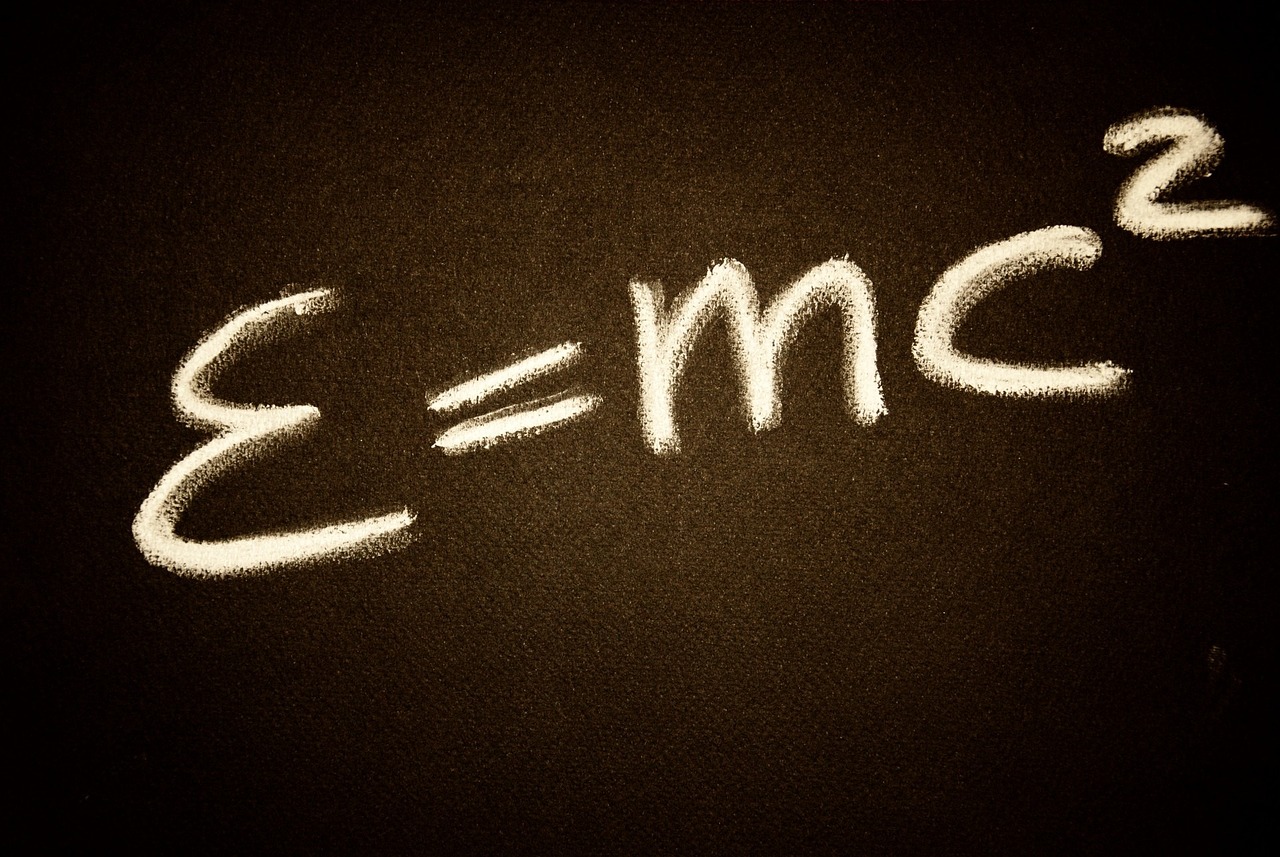
- Relativity of simultaneity, mass-energy equivalence (E = mc²)
- Applications of special relativity in modern physics
- Waves and Vibrations:
- Simple harmonic motion and wave properties
- Wave equation and solutions
- Superposition principle, interference, and standing waves
- Doppler effect and resonance phenomena
- Electrodynamics:
- Electric fields, magnetic fields, and Maxwell’s equations
- Electromagnetic waves, light, and the speed of light
- Lorentz force, electromagnetic radiation, and applications in technology
- Relativistic electrodynamics: interactions between electric and magnetic fields at high velocities
- Quantum Mechanics:
- Wave-particle duality and the uncertainty principle
- Schrödinger equation and its applications
- Quantum states, probability amplitudes, and wavefunctions
- Quantum tunneling, superposition, and entanglement
- Quantum mechanics of atoms and molecules: energy quantization and atomic models
What You’ll Gain:
- A deeper understanding of modern physics, particularly in special relativity and quantum mechanics
- Advanced problem-solving skills in electrodynamics, quantum theory, and the behavior of waves and vibrations
- The ability to apply these concepts in real-world scenarios, particularly in fields such as astrophysics, electronics, and material science
- A solid foundation for further study in advanced topics in physics and related disciplines such as engineering, quantum computing, and nuclear physics
Course Information
- Class Start : Available from January 2025
- Skill Level : Advanced
- Class Time : Learn at your own time
- Language : Lessons delivered in English